Rivian Bets on R2 SUV to Drive Growth & Profitability
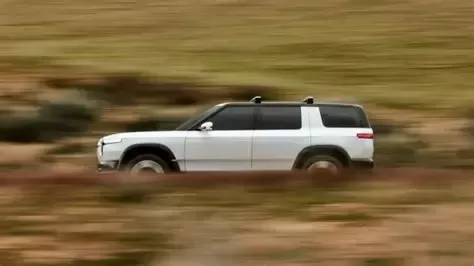
Rivian is charging ahead with its electric vehicle strategy, undeterred by shifting market dynamics and policy adjustments. The company's focus is now on the upcoming Rivian R2, an SUV designed to be a high-volume seller and drive the automaker toward profitability.
Set to debut in early 2026 on a brand-new platform, the R2 marks a strategic shift for Rivian. Unlike the R1T pickup and R1S SUV, the R2 will be solely an SUV offering. According to CEO RJ Scaringe, there are no plans for an R2 pickup variant.
However, the R2 platform is envisioned as the foundation for a broader range of SUVs, including the smaller Rivian R3 and the performance-oriented R3X. These models are intended to propel Rivian to the critical mass needed for long-term financial stability, something the initial R1 platform has struggled to achieve due to its higher price point.
Evolution in Development and Supply Chain
The R2 also showcases Rivian's progress as a company. Scaringe notes that the R2 prototypes are significantly further along in development compared to the early R1 models. This reflects improvements in Rivian's processes and expertise.
A key factor is the transformation in Rivian's supply chain relationships. Initial challenges in establishing a reliable supply chain, exacerbated by pandemic-related shortages, have given way to strong supplier engagement.
Rivian has expanded its Normal, Illinois, plant by 2 million square feet to accommodate R2 production. This expansion includes a new body shop, general assembly area, and an on-site supplier park. The facility now encompasses 6 million square feet. The R3 will be manufactured at the new Georgia plant, currently under construction, which will eventually support production of 400,000 vehicles annually.
R2 Sales Strategy: Focusing on Ownership
Rivian anticipates a higher proportion of R2 customers will purchase rather than lease, unlike the R1 models, where leasing was more common due to incentives and higher prices. With the R2 targeting a more mainstream price point, Rivian expects two-thirds of buyers to choose ownership.
Scaringe believes the EV market's slower growth is partially due to limited appealing choices, allowing Tesla to maintain its dominance. He criticizes the use of compliance vehicles and aggressive lease deals, predicting these tactics will fade as consumers demand compelling EV products. Scaringe highlights that for most Rivian customers, it is their first EV.
Global Ambitions and Policy Adaptations
Rivian envisions a future with R4, R5, and potentially R6 models, alongside global expansion. However, the company has ruled out entering the Chinese market.
Europe is firmly in Rivian's sights, with plans to offer both the R2 and R3 in the region. Scaringe emphasizes that any vehicles developed by Rivian will be designed for both the United States and European markets.
Rivian is actively adapting to evolving U.S. policies, particularly those related to reducing reliance on Chinese suppliers and promoting domestic production. All Rivian assembly currently takes place in the U.S., and the company is transitioning to batteries from a new LG plant in Arizona for the R2.
Rivian's Vision: No Room for Failure
Scaringe, who has dreamed of starting a car company since childhood, acknowledges the challenges of a capital-intensive startup. Despite facing skepticism and near-failure in the past, he expresses unwavering confidence in Rivian's future. The lessons learned from launching the R1T, R1S, and the Amazon commercial van have been invaluable in preparing for the R2 launch. For Scaringe, failure is not an option.