Auburn's Electron Control Breakthrough: Revolutionizing Materials
Researchers at Auburn University have achieved a significant breakthrough in materials science, paving the way for innovations in computing, catalysis, and beyond. Their groundbreaking work focuses on controlling the behavior of electrons within materials, unlocking the potential for faster, more efficient technologies. The team's findings, detailed in ACS Materials Letters, showcase the creation of a novel material that allows for precise manipulation of electrons.
Electrons are fundamental to countless chemical and technological processes, driving energy transfer, chemical bonding, and electrical conductivity. Their behavior underpins everything from chemical synthesis to advanced electronics. In conventional materials, electrons are typically bound to individual atoms, limiting their functionality. However, the Auburn team has developed "Surface Immobilized Electrides," which feature electrons that move freely within the material's structure.
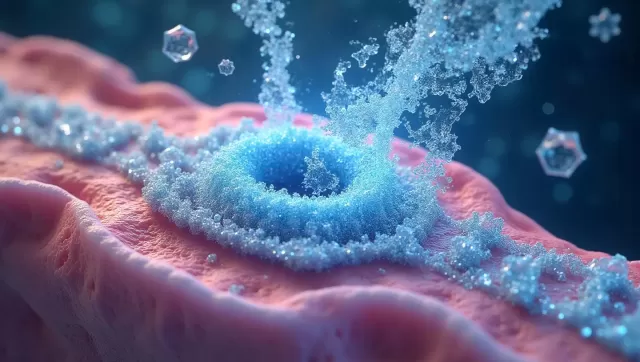
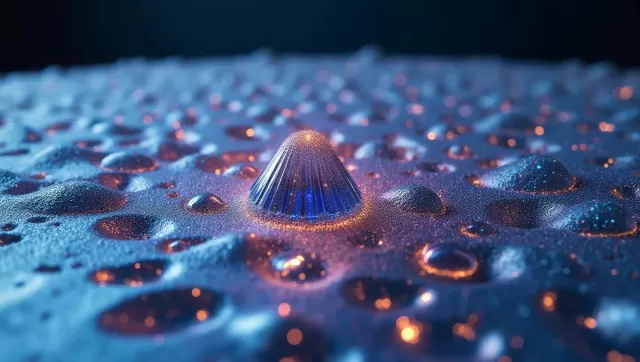
By attaching solvated electron precursors to stable surfaces like diamond and silicon carbide, the researchers have created a durable and tunable material. This unique configuration allows electrons to be arranged in diverse patterns. They can be clustered into isolated "islands," ideal for quantum computing applications, or spread into extended "seas" that facilitate complex chemical reactions.
This versatility opens up exciting possibilities:
- Quantum Computing: The isolated electron "islands" can function as quantum bits (qubits), enabling the development of powerful quantum computers capable of tackling problems beyond the reach of current technology.
- Advanced Catalysis: The extended electron "seas" can act as catalysts, accelerating essential chemical reactions. This could revolutionize the production of fuels, pharmaceuticals, and industrial materials, making these processes faster and more efficient.
Traditional electrides often suffered from instability and scalability issues. The Auburn team's approach of depositing electrides directly onto solid surfaces overcomes these challenges, offering a pathway to real-world applications.
This research represents a fundamental advancement in materials science with far-reaching implications. By learning to control free electrons, scientists can design materials with unprecedented capabilities. This could lead to a future with faster computers, smarter machines, and transformative technologies we can scarcely imagine today.