Mammal Hearing Evolved 50 Million Years Earlier Than Thought
For decades, paleontologists have been captivated by a pivotal mystery in our own evolutionary story: when did mammals gain their exceptional sense of hearing? The sophisticated auditory system of modern mammals, with its delicate eardrum and chain of tiny middle ear bones, is a marvel of biological engineering. This trait is believed to have been a game-changer for our small, often nocturnal ancestors, allowing them to thrive in a world ruled by dinosaurs. New research is dramatically revising the timeline for this critical adaptation.
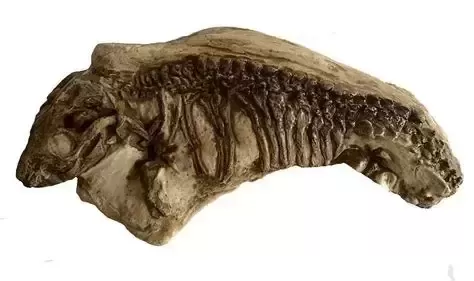
A groundbreaking study from the University of Chicago now suggests that advanced hearing emerged nearly 50 million years earlier than previously thought. The focus of this discovery is Thrinaxodon liorhinus, a shrew-sized mammal forerunner that roamed the Earth roughly 250 million years ago. By applying cutting-edge engineering simulations to detailed CT scans of a Thrinaxodon fossil, researchers have uncovered compelling evidence that this animal possessed a functional eardrum capable of efficiently detecting airborne sound.
Testing a Decades-Old Hypothesis with Modern Technology
Thrinaxodon was a cynodont, an early Triassic group that displayed a fascinating mosaic of reptilian and mammalian characteristics. While these creatures had jaw bones that were still connected to their ear bones—a primitive trait—they also showed early signs of mammalian features like specialized teeth and evidence of a higher metabolism.
In the 1970s, paleontologist Edgar Allin proposed an intriguing idea. He hypothesized that cynodonts like Thrinaxodon might have had a thin membrane stretched across a hook-like structure in their jaw, acting as a proto-eardrum. For years, this theory remained untestable, with many scientists believing these animals relied primarily on "jaw listening," sensing vibrations through their lower jaw pressed against the ground.
Today, advanced imaging and computational power have finally allowed researchers to put Allin's idea to the test. A team led by graduate student Alec Wilken, along with Professors Zhe-Xi Luo and Callum Ross, used high-resolution CT scans to create a precise digital model of a Thrinaxodon skull and jaw. They then employed a engineering technique called finite element analysis, commonly used to simulate stress on bridges or airflow over aircraft wings, to model how sound waves would interact with the ancient anatomy.
Computational Biomechanics Reveals an Early Auditory Advantage
The simulation provided a clear and decisive result. A membrane positioned within the jaw's curved groove would have been highly effective at capturing airborne sound waves. The model demonstrated that vibrations from this early eardrum were strong enough to move the connected ear bones and stimulate auditory nerves, covering a useful range of frequencies.
This finding indicates that Thrinaxodon likely enjoyed a dual hearing system. While it could still sense vibrations through its jaw, the primary mode for detecting sound was already through the air via a dedicated eardrum. This capability would have offered a significant survival advantage, enabling sharper environmental awareness.
"We can essentially bring our Thrinaxodon back to life in the computer," explained Professor Luo. "By applying material properties from living animals to our digital model, the simulation showed that airborne sound transmission was not only possible but effective."
Wilken highlighted the power of merging classic paleontological questions with new tools. "We took a high-concept problem—figuring out how ear bones moved in a 250-million-year-old fossil—and used sophisticated biomechanics to test a simple hypothesis. The eardrum model performed remarkably well on its own."
This research fundamentally reshapes our understanding of sensory evolution. It places a key mammalian adaptation deep in the Triassic period, suggesting that the evolutionary journey toward our sensitive hearing began much closer to the time of the worst mass extinction in Earth's history, providing early mammals a crucial sensory edge as ecosystems recovered.