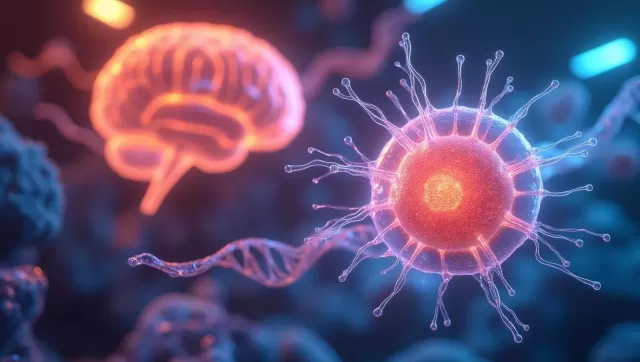
Mind Power Boosts Immune Response: New Research

Emerging scientific understanding suggests a powerful connection between our mental state and the body's defenses. Recent studies are shedding light on how positive thinking can actually bolster the immune system's ability to fight off threats.
Training the Brain for a Stronger Immune Response
Researchers have observed that individuals who actively engaged their brain's reward system through positive mental strategies showed a more robust response to vaccination. These participants generated a greater number of antibodies following immunization compared to those who did not employ these techniques. This groundbreaking research in humans provides a potential causal link: deliberately activating certain brain pathways can enhance vaccine effectiveness.
While this doesn't imply that optimism alone can cure diseases, it opens exciting avenues for utilizing mental approaches as a supportive tool for the immune system. The potential applications extend beyond fighting infections to even aiding in the body's efforts to control and minimize tumor growth.
The Science Behind the Connection
Building on previous work that demonstrated the benefits of positive expectations, such as the well-documented placebo effect, and animal studies indicating that stimulating the brain's reward system can boost immunity, this human study aimed to clarify the picture.
In the research, healthy volunteers participated in specialized brain training sessions. Through these sessions, they learned to focus on and amplify activity in specific brain regions. Real-time feedback, in the form of visible scores that increased with brain activity, allowed them to monitor their progress.
Following four training sessions, these volunteers received a hepatitis B vaccine. Subsequent blood tests conducted at two and four weeks post-vaccination were analyzed for antibody levels. The findings were significant: participants who most successfully activated a key part of the brain's reward system, known as the ventral tegmental area (VTA), exhibited the strongest immune response to the vaccine. The most effective method for achieving this activation was through cultivating positive expectations and visualizing favorable outcomes.
Future Implications and Complementary Care
While these findings are promising for potentially enhancing patients' immune systems, larger-scale trials are necessary to confirm any definitive medical benefits. Researchers are exploring whether other immune system components, such as those involved in inflammation, are also influenced by these mental strategies.
The approach is being positioned as a complementary tool, designed to enhance immune responsiveness to vaccines rather than replace established medical treatments or vaccines themselves. Experts emphasize that this is not a standalone cure but a potential adjunct to conventional care.
The clinical relevance of these effects is still under investigation, and it is likely that if proven beneficial in larger trials, these mental strategies would serve to complement existing treatments. However, the simplicity and cost-effectiveness of encouraging positive expectations are noteworthy. Healthcare professionals can readily incorporate supportive language, such as expressing confidence in the care provided or referencing successful treatment outcomes for similar patients, without exaggeration. This offers a tangible and accessible signal that such approaches warrant further exploration and implementation.