Tiny Quakes Reveal Northern California's Hidden Plates
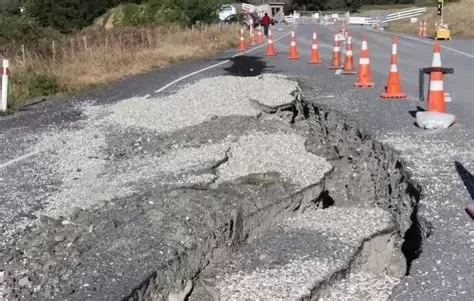
Researchers have identified a sophisticated geological structure off the coast of Northern California, shedding light on a volatile intersection between the Cascadia subduction zone and the San Andreas fault. This region, known for its potential to generate devastating tremors, has long been a subject of study, but recent findings offer a much clearer picture of the tectonic mechanics at play.
Collaborating scientists from the University of California, Davis, the University of Colorado Boulder, and the U.S. Geological Survey (USGS) utilized advanced monitoring techniques to map this area. According to Amanda Thomas, a coauthor of the study and professor at UC Davis, gaining a firm grasp of these underlying tectonic processes is essential for accurately predicting seismic hazards in the future.
A Complex Junction Beneath the Waves
The Mendocino Triple Junction is located just offshore from Humboldt County. In theory, this is the meeting point for three massive tectonic plates. South of this intersection, the Pacific plate slides northwest against the North American plate, forming the San Andreas fault. To the north, the Gorda plate pushes northeast, diving beneath the North American plate in a subduction process.
However, while geological maps often portray this as a clean three-way intersection, the reality underground is far more chaotic. Evidence of this complexity surfaced during a magnitude 7.2 earthquake in 1992. The tremor originated at a significantly shallower depth than existing models suggested was possible, prompting scientists to investigate further.
Peering Under the Geological Iceberg
David Shelly, the study's lead author from the USGS, compares the challenge to observing an iceberg. While surface features provide some clues, the vast majority of the structural configuration remains hidden from view.
To map the unseen territory, the research team deployed a dense array of seismometers throughout the Pacific Northwest. These instruments were tuned to detect specific phenomena:
- Low-frequency earthquakes: These are extremely faint tremors, thousands of times weaker than what humans can feel.
- Slow-slip events: These occur when tectonic plates slide past one another gradually rather than snapping suddenly.
To validate their underground map, the team analyzed how these micro-quakes reacted to tidal stress. Similar to how the moon and sun influence ocean tides, their gravitational pull exerts slight pressure on the Earth's crust. The researchers noted that when tidal forces aligned with the natural movement of the plates, the frequency of these small earthquakes spiked, confirming their models.
Identifying Five distinct Tectonic Pieces
The most significant finding from the study is that the region is not merely a junction of three plates. Instead, the team identified a system involving five distinct moving parts, two of which are entirely submerged beneath the crust.
The updated model reveals a complex interplay of geological fragments:
- A Splintered North American Plate: At the southern tip of the Cascadia zone, a piece of the North American plate has broken off. It is currently being dragged downward alongside the sinking Gorda plate.
- The Pioneer Fragment: South of the triple junction, the Pacific plate is dragging a massive slab of rock, dubbed the Pioneer fragment, northward beneath the North American plate.
The boundary separating this Pioneer fragment from the plate above it is nearly flat, making it invisible to surface observation. Historically, this fragment was part of the Farallon plate, an ancient geological structure that once ran along the California coast but has largely been consumed by the Earth's mantle.
Resolving Historical Seismic Mysteries
This new five-piece model provides a logical explanation for the anomalies observed during the 1992 earthquake. The data suggests that the rigid surface being forced beneath North America is situated at a much shallower depth than previously hypothesized.
This discovery challenges the long-held assumption that fault lines strictly follow the leading edge of a subducting slab. Instead, the plate boundary appears to deviate significantly from expected locations, altering how scientists calculate the potential for future earthquakes in the region.