
State Dept. Ditches Calibri for Times New Roman
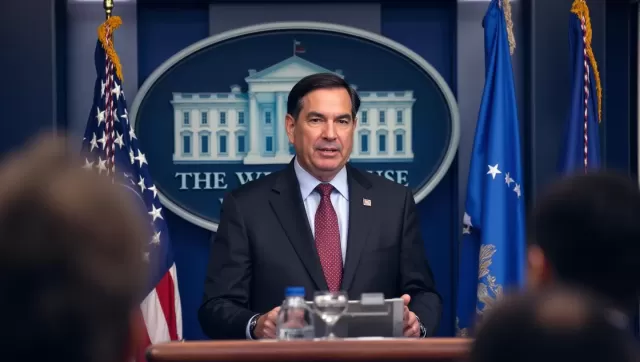
In a move that has drawn both amusement and criticism, the U.S. State Department has officially retired the Calibri font, replacing it with the more traditional Times New Roman for all official correspondence. The decision, reportedly spearheaded by Secretary of State Marco Rubio, is being framed as a move to "restore decorum and professionalism" to diplomatic communications. However, the underlying rationale appears to be a broader governmental pushback against diversity, equity, inclusion, and accessibility (DEIA) initiatives.
Calibri, a sans-serif typeface known for its clean lines and readability, was adopted in 2023 under the previous administration, with its selection attributed to the department's then-DEIA office. The font was reportedly chosen with accessibility in mind, aiming to improve readability for individuals with visual impairments and conditions like dyslexia. Sans-serif fonts, lacking the decorative flourishes found at the ends of letter strokes, are often considered more user-friendly for a wider range of readers.
However, the association of Calibri with DEIA efforts has seemingly placed it in the crosshairs of a broader anti-DEIA agenda within the current administration. Secretary Rubio, while acknowledging that Calibri wasn't the "most illegal, immoral, radical or wasteful" example of DEIA, still expressed strong disapproval. He reportedly cited the font as contributing to the "degradation" of the department's official communications. This sentiment highlights a growing trend of scrutinizing and dismantling DEIA programs and their perceived symbols.
The shift back to Times New Roman, a font often associated with a more established, formal aesthetic, signifies a preference for tradition over contemporary design principles, particularly those aimed at inclusivity. Interestingly, even the New York Times, a publication deeply entrenched in the world of professional writing, transitioned away from Times New Roman nearly two decades ago, suggesting a potential disconnect between the State Department's adopted standard and current industry practices.
This font controversy, while seemingly minor, underscores a larger debate about the role of DEIA in government and public institutions. The strong reactions from various quarters, including informal surveys within the tech industry indicating a mixed reception to Calibri, suggest that font choices, much like other cultural signifiers, can evoke passionate responses and become unexpectedly politicized. The State Department's decision to ban Calibri, while presented as a matter of professional standards, is undeniably intertwined with the evolving political landscape surrounding DEIA.