Trillion-Dollar AI Infrastructure Race Heats Up
The artificial intelligence revolution is not just about groundbreaking algorithms and innovative software. Beneath the surface, a titanic struggle is underway to build the physical infrastructure required to power these AI behemoths. Experts predict trillions of dollars will be funneled into this sector before the decade closes, a figure largely driven by the very companies pushing the boundaries of AI. This escalating demand is placing unprecedented pressure on energy grids and straining the construction industry's capacity to its breaking point.
Let's examine some of the most ambitious AI infrastructure projects, highlighting the colossal spending commitments from industry titans like Meta, Oracle, Microsoft, Google, and OpenAI. This landscape is ever-evolving, and we'll continue to update this analysis as new developments emerge and investment figures climb to even greater heights.
Microsoft's Billion-Dollar Bet on OpenAI
Arguably, the spark that ignited the contemporary AI boom was Microsoft's initial $1 billion investment in OpenAI back in 2019. This deal not only provided crucial funding to the then-nascent organization but, more importantly, established Microsoft as OpenAI's exclusive cloud provider. As the computational demands of AI model training skyrocketed, Microsoft's investment increasingly took the form of Azure cloud credits rather than direct cash injections.
This proved to be a mutually beneficial arrangement. Microsoft could boast inflated Azure sales figures, while OpenAI gained access to the resources it needed to fuel its insatiable appetite for computing power. Over the years, Microsoft's total investment ballooned to nearly $14 billion, a strategic move poised to yield substantial returns as OpenAI matures into a fully-fledged for-profit enterprise.
However, the exclusive partnership between the two companies has begun to loosen recently. OpenAI announced its intention to diversify its cloud infrastructure, relinquishing Microsoft's exclusive status and reserving for them only the right of first refusal. Furthermore, Microsoft has started exploring alternative foundation models, signaling a move toward greater independence from the AI giant.
The Anthropic Model
The OpenAI/Microsoft arrangement set a precedent, prompting other AI service providers to forge strategic alliances with specific cloud providers. Anthropic, for instance, secured an $8 billion investment from Amazon, accompanied by kernel-level hardware modifications designed to optimize performance for AI training workloads. Google Cloud has also onboarded smaller AI firms, such as Lovable and Windsurf, as "primary computing partners," although these deals did not include direct capital investment. Even OpenAI has returned to the investment well, receiving a $100 billion investment from Nvidia in September, granting it even greater access to the company's coveted GPUs.
Oracle's Meteoric Rise
Oracle's ascension in the AI infrastructure landscape has been nothing short of spectacular. In June 2025, an SEC filing revealed a staggering $30 billion cloud services agreement with an unnamed partner, exceeding the company's cloud revenue for the entire previous fiscal year. The partner was later unveiled as OpenAI, placing Oracle squarely in the mix as one of OpenAI's post-Microsoft hosting providers. The news sent Oracle's stock soaring.
The story repeated itself a few months later. In September, Oracle announced a five-year, $300 billion deal for compute power, commencing in 2027. Oracle's stock surged even further, briefly propelling founder Larry Ellison to the status of the world's wealthiest individual. The sheer magnitude of the deal is astounding. Considering OpenAI does not possess $300 billion in disposable income, the figure implies exponential growth for both companies and a considerable leap of faith.
Regardless, this deal has solidified Oracle's position as a leading AI infrastructure provider and a formidable financial force.
Nvidia's Strategic Investments
The insatiable demand for GPUs has made Nvidia flush with cash, which the company is now reinvesting into the AI ecosystem through various unorthodox arrangements. In September 2025, Nvidia acquired a 4% stake in competitor Intel for $5 billion. Even more surprising have been the deals struck with its own customers. A week after the Intel deal was unveiled, Nvidia announced a $100 billion investment in OpenAI, paid for with GPUs that would be used in OpenAI's ongoing data center projects. Nvidia has since announced a similar arrangement with Elon Musk's xAI, and OpenAI has launched a separate GPU-for-stock agreement with AMD.
The circularity of these arrangements raises eyebrows. Nvidia's GPUs are valuable precisely because of their scarcity. By trading them directly into an ever-inflating data center scheme, Nvidia is ensuring that supply remains constrained. The same logic applies to OpenAI's privately held stock, which derives its value from its inaccessibility to public markets. While OpenAI and Nvidia are currently enjoying the ride, closer scrutiny is likely if the momentum slows down.
Building Hyperscale Data Centers for the Future
For companies like Meta, which already possess substantial legacy infrastructure, the situation is more complex, yet equally expensive. Mark Zuckerberg has publicly stated that Meta intends to allocate $600 billion to U.S. infrastructure projects by the end of 2028.
In just the first half of 2025, Meta's capital expenditures increased by $30 billion compared to the previous year, largely attributable to the company's burgeoning AI ambitions. While some of this spending is allocated to large-scale cloud contracts, such as a recent $10 billion deal with Google Cloud, an even larger portion is being channeled into two massive new data centers.
The "Hyperion" data center, a sprawling 2,250-acre site in Louisiana, is projected to cost $10 billion to construct and provide an estimated 5 gigawatts of compute power. Notably, the site has secured an agreement with a local nuclear power plant to manage the substantial energy requirements. A smaller facility in Ohio, known as "Prometheus," is slated to come online in 2026, powered by natural gas.
This level of infrastructure development carries significant environmental consequences. xAI has constructed a hybrid data center and power-generation plant in South Memphis, Tennessee. This plant has rapidly become one of the county's largest sources of smog-producing chemicals, owing to its reliance on natural gas turbines that some experts believe violate the Clean Air Act.
Project Stargate: An Ambitious Moonshot
Two days after his second inauguration, President Trump unveiled a joint venture between SoftBank, OpenAI, and Oracle, earmarking $500 billion for AI infrastructure development in the United States. Dubbed "Stargate," the project was met with considerable fanfare, with Trump touting it as "the largest AI infrastructure project in history." Sam Altman echoed this sentiment, calling it "the most important project of this era."
The plan involved SoftBank providing the funding, Oracle managing the construction with input from OpenAI, and Trump streamlining the regulatory process. However, doubts arose from the outset, particularly from Elon Musk, who questioned the availability of funds.
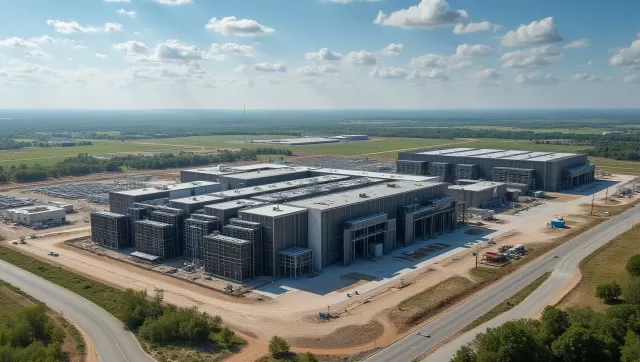
As the initial excitement waned, the project lost momentum. Reports surfaced of disagreements among the partners. Nevertheless, the project has progressed, with eight data centers under construction in Abilene, Texas. The final building is scheduled for completion by the end of 2026.