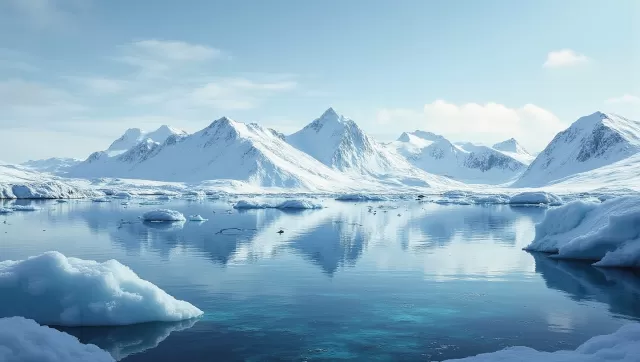
Antarctic Ice Shelf Melt: A Global Sea Level Threat
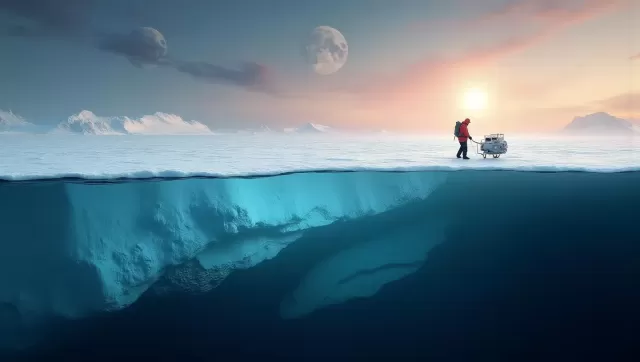
Antarctica's landscape is a study in extremes, but the most significant changes are occurring far beneath the visible surface. While the top of the ice sheet is battered by freezing winds and heavy snow, the real threat to global stability lies nearly two kilometers deep, where the ocean meets the base of the ice. Scientists are currently racing to understand "basal melt"—the process where warming seawater erodes ice shelves from below. This hidden interaction is a primary driver of uncertainty in climate projections and a critical factor in the future of the world's coastlines.
The Protective Role of Antarctic Ice Shelves
Antarctica is fringed by more than 70 ice shelves, which are massive floating extensions of the continental ice sheet. While these shelves do not directly raise sea levels when they melt—as they are already displacing water—their structural integrity is vital. They act as a stabilizing force, or a "cork," holding back the massive inland glaciers. If these shelves weaken or collapse due to ocean heating, the continental ice can accelerate its slide into the sea, potentially raising global water levels by several meters.
Key statistics regarding this vulnerability include:
- The continent's most unstable regions hold enough ice to raise global sea levels by approximately 15 meters if they were to melt entirely.
- Research led by Dr. Ben Galton-Fenzi indicates that Antarctic ice shelves lose roughly 843 billion tonnes of mass every year due to sub-surface melting.
- This annual loss is equivalent to the volume of water discharged by the Nile River into the ocean each year.
The Challenge of Deep-Sea Research
Gathering data in one of the world's most hostile environments is a logistical nightmare. Temperatures frequently drop to -20°C, and the sheer thickness of the ice makes traditional satellite or ship-based observation impossible. To overcome this, researchers have synthesized a decade of modeling data from nine international research groups. This collaborative effort aims to refine ice sheet projections, which remain one of the most difficult variables in predicting how fast and how much the sea will rise.
Technological hurdles often limit observations to a few drilled holes, but researchers have found success using autonomous Argo floats. These instruments can drift deep beneath the ice for months, recording temperature and salinity. Recent data from these floats confirmed that the Denman Glacier is being exposed to warm water, leading to significant thinning from below.
The Vulnerability of the Denman Glacier
The Denman catchment is a particularly concerning region for glaciologists. Its unique geography includes deep canyons carved by ancient glacial movements, which now act as conduits for warm ocean water to reach the heart of the ice shelf.
Specific risks associated with this area include:
- The Denman catchment holds enough ice to trigger a 1.5-meter rise in global sea levels.
- The configuration of the sea floor means that once the glacier retreats past a certain point, it may continue to melt in an unstable, self-perpetuating cycle.
- The lack of historical data makes it difficult to predict exactly when this tipping point might be reached.
Disruption of Global Ocean Currents
The impact of melting ice extends beyond rising tides. Scientists are increasingly concerned about how an influx of fresh meltwater could alter the "ocean conveyor belt." This massive circulation system is responsible for regulating the planet's climate by moving heat around the globe.
If these currents are disrupted by a sudden change in ocean salinity and temperature, the consequences could be dramatic, leading to unstable weather patterns and shifted climate zones. While the total collapse of these systems might take centuries, the "commitment" to such a fate is decided by current greenhouse gas emissions. Once the Antarctic ice sheet reaches a certain level of instability, the process becomes irreversible, permanently altering the map of the world.