Mountains Warm Faster: A Global Threat

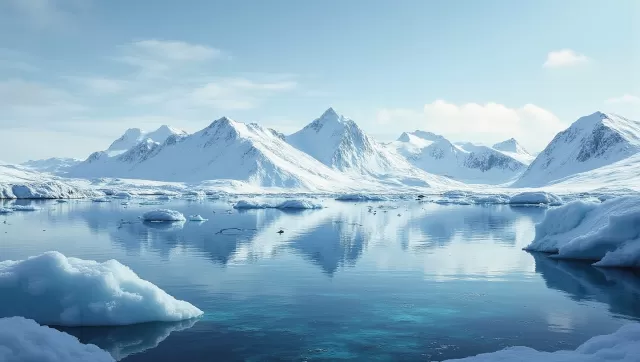
A new global analysis confirms a concerning pattern: high-altitude environments are heating up at a faster rate than the lowlands surrounding them. This accelerated warming poses a profound threat to the billions who depend on mountain ecosystems for water, food, and security. The study synthesizes extensive evidence on a phenomenon known as elevation-dependent climate change, where the impacts of a shifting climate intensify with altitude.
The Global Evidence for Accelerated Mountain Warming
An international research team, led by experts at the University of Portsmouth, conducted a comprehensive review of climate data and regional studies spanning four decades. Their work examined iconic ranges including the Rockies, the Alps, the Andes, and the Tibetan Plateau. The findings paint a consistent and alarming picture:
- Temperature Increase: Between 1980 and 2020, mountain areas warmed an average of 0.21°C per century faster than adjacent lowland regions.
- Shifting Precipitation: Rainfall patterns are growing more unstable, with snow increasingly turning to rain at higher elevations.
- Ecosystem Disruption: The rapid loss of snow and ice mirrors changes seen in the Arctic, driving fundamental shifts in high-altitude habitats.
Researchers note that the rate of environmental change can actually increase the higher one goes, a detail often overlooked in broader climate discussions.
Why This Matters for Populations Worldwide
The implications of these trends reach far beyond remote peaks. Over a billion people rely directly on mountain snowpack and glaciers as a primary freshwater source. Major river systems feeding populous nations like China and India originate in the Himalayas, where ice loss is now occurring faster than previously estimated.
The transition from snow to rain is particularly hazardous. It alters the timing and volume of water release, increasing the risk of catastrophic flooding during extreme weather events. Furthermore, as temperatures climb, flora and fauna are forced to migrate uphill. This chase for cooler conditions has a literal dead end, leading to potential species extinction and irreversible ecosystem collapse when there is nowhere left to go.
Recent Disasters Highlight the Growing Risk
The tangible dangers of these changes are already manifesting. Scientists point to recent catastrophic flooding in Pakistan, where intense monsoon rains combined with extreme mountain precipitation to create devastating floods, resulting in significant loss of life. Such events underscore how rapidly altering mountain climates can amplify natural hazards into human tragedies.
The Critical Need for Better Data and Models
A significant obstacle to fully understanding this crisis is a lack of reliable monitoring. Mountain environments are notoriously difficult and expensive to instrument, leading to gaps in weather and climate data. This means current estimates of warming rates and ice loss may be conservative.
There is also a pressing need for climate models with much higher spatial resolution. Standard models that track changes every few kilometers cannot capture the dramatic variations that occur over short distances on mountain slopes. While advancements in computing are improving model accuracy, experts stress that technology alone is insufficient.
The consensus is clear: addressing mountain climate change requires urgent global action on emissions paired with a major investment in monitoring infrastructure for these vulnerable yet vital regions. The health of mountain ecosystems is inextricably linked to the stability of climates worldwide.