India-UAE Trade Pact: Aiming for $200B by 2032
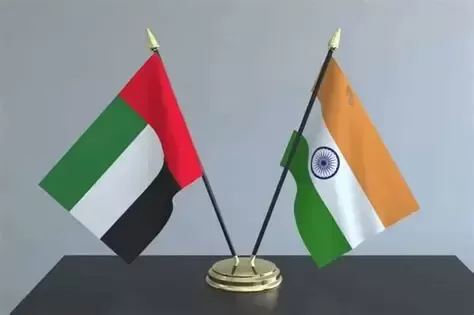
India is aggressively expanding its economic footprint in the Middle East, setting a target to double its bilateral trade with the United Arab Emirates to $200 billion by 2032. This ambitious milestone was highlighted during a high-level diplomatic summit in New Delhi between Prime Minister Narendra Modi and UAE President Sheikh Mohamed bin Zayed Al Nahyan. The meeting underscores a deepening strategic alliance as India seeks to insulate its economy from shifting trade dynamics in the West.
A Landmark Ten-Year Energy Pact
A central achievement of the recent diplomatic talks is a long-term liquefied natural gas (LNG) agreement that secures India's energy future. The Abu Dhabi National Oil Company (ADNOC) has committed to a ten-year supply deal with India's state-run Hindustan Petroleum Corporation. The contract, valued at approximately $3 billion, is scheduled to commence in 2028.
The implications of this deal for the regional energy market are significant:
- India will emerge as the primary global customer for ADNOC's LNG exports.
- By 2029, Indian demand is expected to account for 20% of the UAE state-owned firm's total sales.
- The agreement provides a stable, long-term fuel source for India's expanding industrial infrastructure.
Building on the CEPA Foundation
The roadmap to $200 billion is supported by a track record of rapid growth. Trade between the two nations reached $100 billion in the 2025 fiscal year, fueled largely by the Comprehensive Economic Partnership Agreement (CEPA) implemented in 2022. Currently, the UAE stands as India's third-largest trading partner, surpassed only by the United States and China.
The relationship is bolstered by more than just commodities; it is rooted in deep demographic ties. The UAE is home to approximately 3.5 million Indian expatriates, who play a vital role in the economic fabric of both nations. As of late 2025, India accounted for nearly 9% of the UAE's total trade volume and 14% of its non-oil exports, signaling a transition toward a more diverse economic exchange beyond crude oil.
Navigating Global Trade Volatility
India's focus on the UAE and other regional partners comes at a time of increasing friction with traditional Western allies. Following the imposition of 50% tariffs on Indian exports by the U.S. government last year, New Delhi has accelerated its efforts to diversify its trade portfolio. Experts suggest that the inherent unpredictability of U.S. trade policy has pushed Indian leadership to seek more reliable, long-term bilateral frameworks.
To mitigate the risks of over-reliance on any single market, India has pursued a flurry of new international agreements:
- New trade pacts were recently finalized with the United Kingdom and Oman.
- A comprehensive economic deal with New Zealand is currently under negotiation, with a target signing date in early 2026.
- High-level diplomatic summits are becoming more frequent, allowing for rapid policy adjustments in response to global market shifts.
This strategic pivot suggests that India is no longer content with traditional trade hierarchies. By strengthening ties with the UAE, New Delhi is positioning itself at the center of a new corridor of commerce that bridges Southern Asia with the Middle East.