
Ocean Seaweed Blooms Surge, Signaling Regime Shift
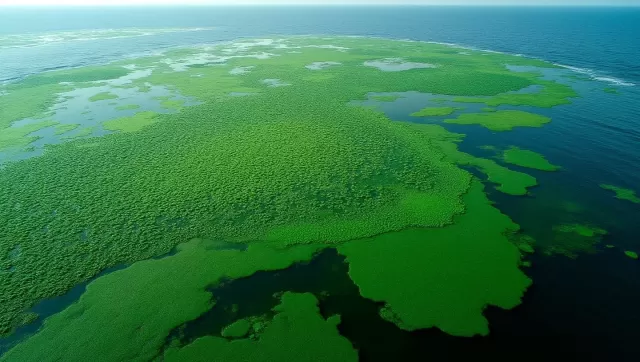
A significant and widespread change is underway in our planet's oceans. Scientists are documenting a dramatic, global increase in massive floating mats of seaweed, a phenomenon they describe as a potential "regime shift" in marine ecosystems. This surge is being propelled by a combination of climate change-driven ocean warming and the excessive nutrient runoff from agricultural and industrial sources.
Using advanced artificial intelligence to analyze over a million satellite images spanning two decades, researchers have quantified this alarming trend. The data reveals that blooms of large, floating macroalgae—like the sargassum that forms the Great Atlantic Sargassum Belt—have been expanding at a rate of 13.4% per year in tropical regions. Notably, the most intense acceleration began after 2008.
A Global Shift in Ocean Composition
Prior to 2008, such extensive blooms of free-floating seaweed were largely unreported outside of specific areas like the Sargasso Sea. The current situation marks a stark contrast. Vast algal formations are now regularly observed from space, including the expansive belt stretching from the Gulf of Mexico to West Africa, rings around islands in the Pacific, and recurring harmful algal blooms along coastlines like Florida's.
This represents a fundamental transition from an ocean with relatively sparse macroalgae to one that is increasingly rich with it. While microscopic algae (phytoplankton) have also increased, their growth rate is far slower, at about 1% annually, suggesting they respond differently to environmental pressures.
Drivers and Tipping Points
The research strongly links the explosive growth of seaweed to human activities. The timing of major blooms aligns with accelerated global ocean warming observed since 2010. Furthermore, the enrichment of coastal waters with fertilizers and other pollutants—a process known as eutrophication—provides an abundant food source for these algae.
Scientists have identified specific years, including 2008, 2011, and 2012, as tipping points for different seaweed species across various oceans. This indicates that critical ecological thresholds have been crossed, potentially locking in this new state.
Far-Reaching Consequences for the Planet
This regime shift carries profound implications for ocean health and global climate:
- Altered Light and Ecology: Dense mats darken surface waters, reducing light penetration and disrupting ecosystems below.
- Biogeochemical Changes: The decomposition of massive seaweed blooms can deplete oxygen in the water, create dead zones, and alter nutrient cycles.
- Climate Feedback: While algae absorb carbon, the ultimate fate of that carbon—whether it is sequestered or released back into the atmosphere—is complex and could influence the pace of climate change.
- Ocean Stability: Changes in surface biology and chemistry can affect ocean layering and stability, with cascading effects on marine life.
The evidence suggests that oceanic conditions have already shifted to favor macroalgae. Understanding and mitigating the causes of this shift is now a critical challenge for preserving marine balance and function.